
The programme
The week, at Change Your Life Kindle.
The programme takes place over seven days and six nights at Cascina Fico, near Varzi in northern Italy. Students live in the same house as the residential team, rather than travelling in each day.
Mornings begin with Qi Gong before breakfast. There are three study sessions during the day, with time outside in the afternoon. Evenings are spent with the group, often with a film, a tournament, or dinner together.
- Seven days, six nights
- Cascina Fico, Varzi (PV)
- 36 students per edition
01 · A typical day
A steady shape, day by day.
Days at Kindle have a steady shape. Three sessions of Three-Dimensional Reading run across each day, broken up by walks, team games, or a workshop on the day’s theme. Mornings begin with twenty minutes of Qi Gong and twenty of Presence Meditation before breakfast. Evenings belong to shared meals and to whatever the group has put together — a film, a tournament, a talent show, the Saturday gala dinner.
Each part of the schedule is there for a reason. The shape of the week is the result of more than 115 editions of running this programme, refined edition after edition to keep the balance between study, play, and the quieter things that become part of who a teenager is. The first two days are about settling in. From Wednesday, the routine clicks into place and the days build towards Saturday. By that point, most students have stopped checking their phones — and nobody asked them to.

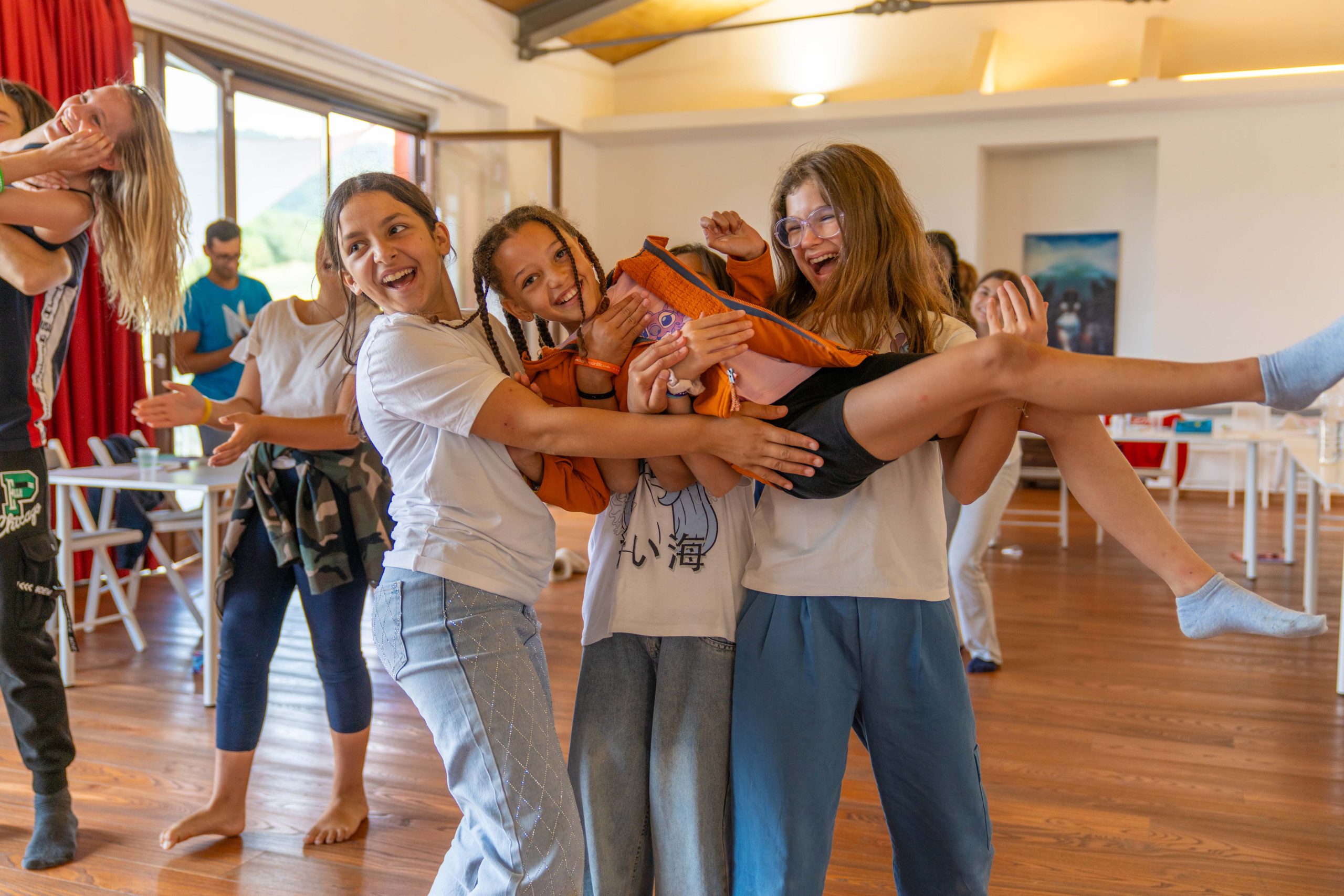
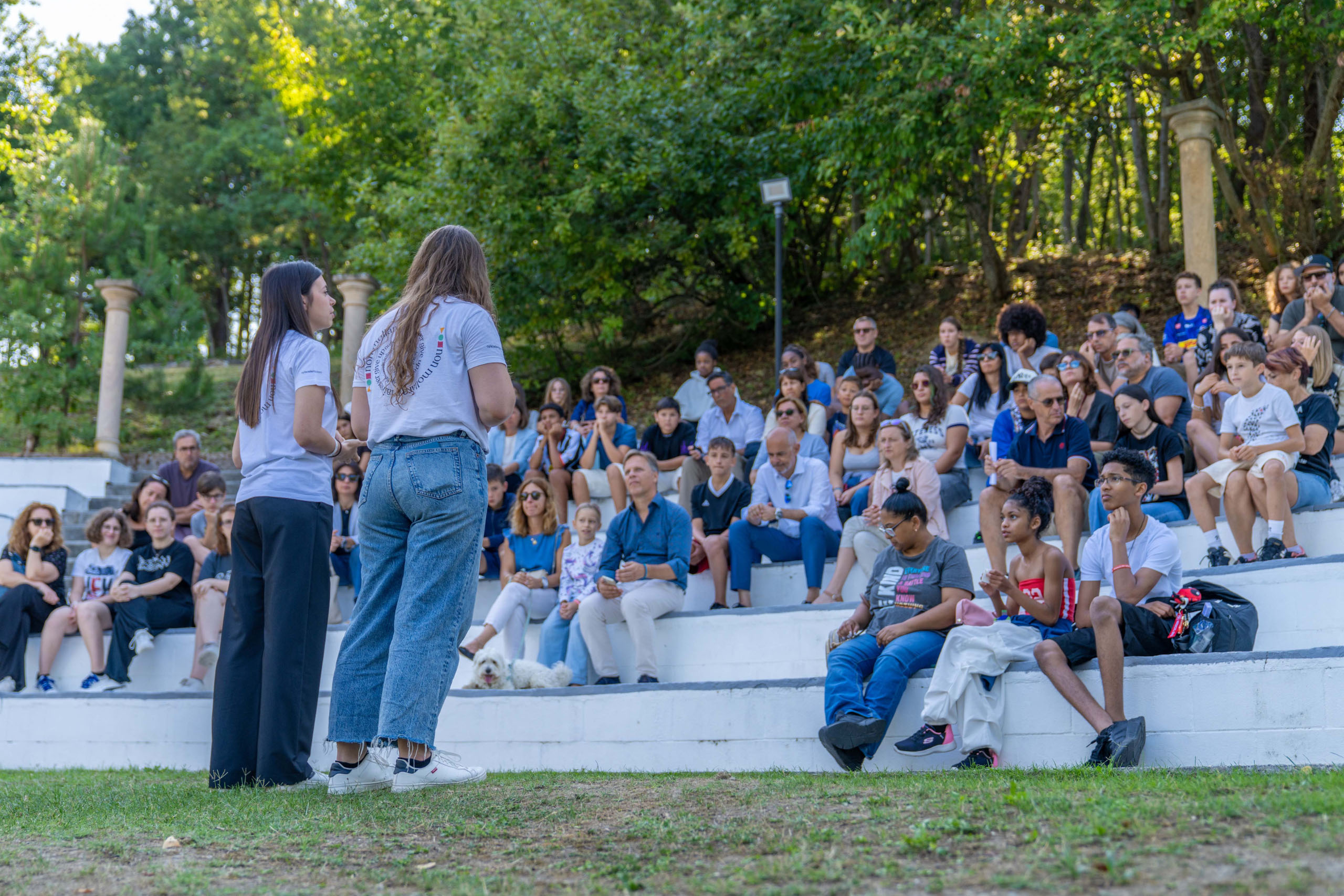

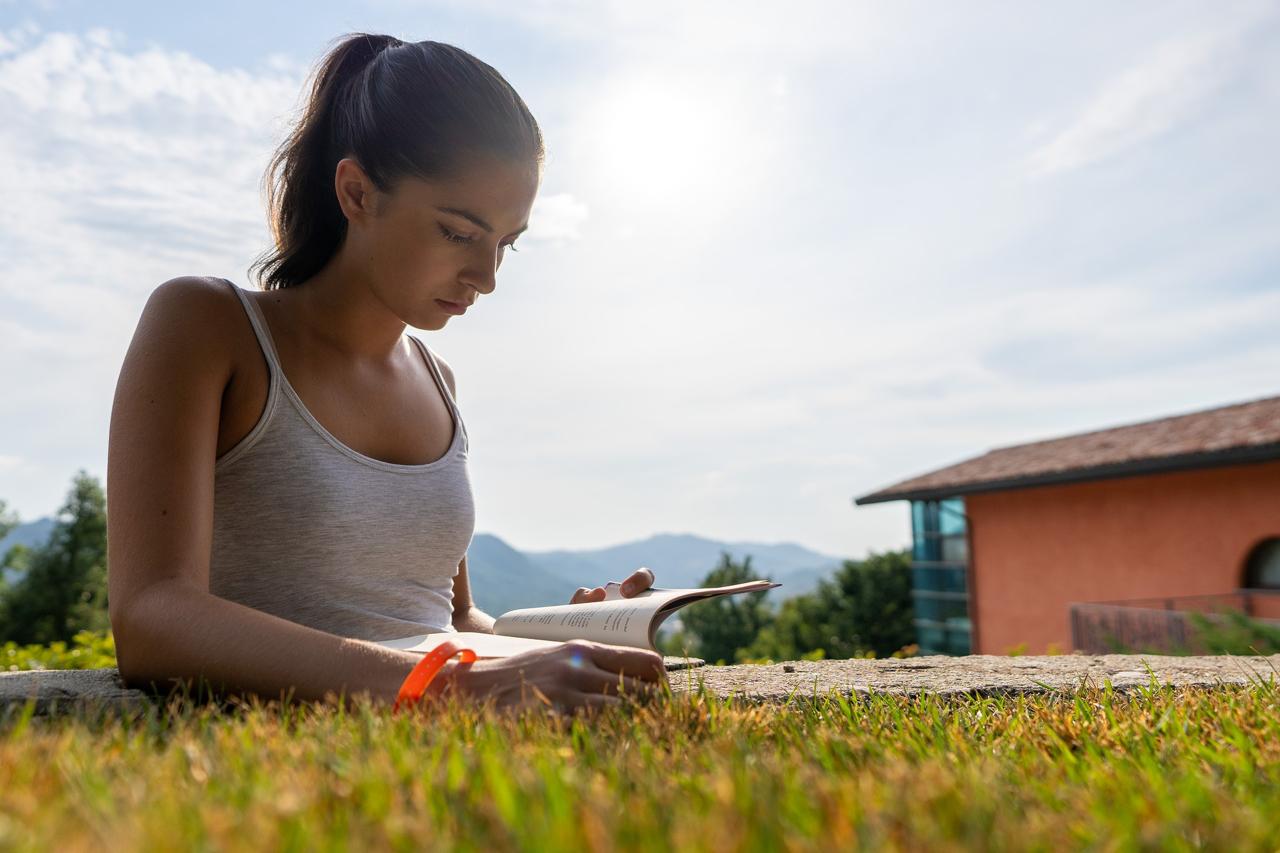
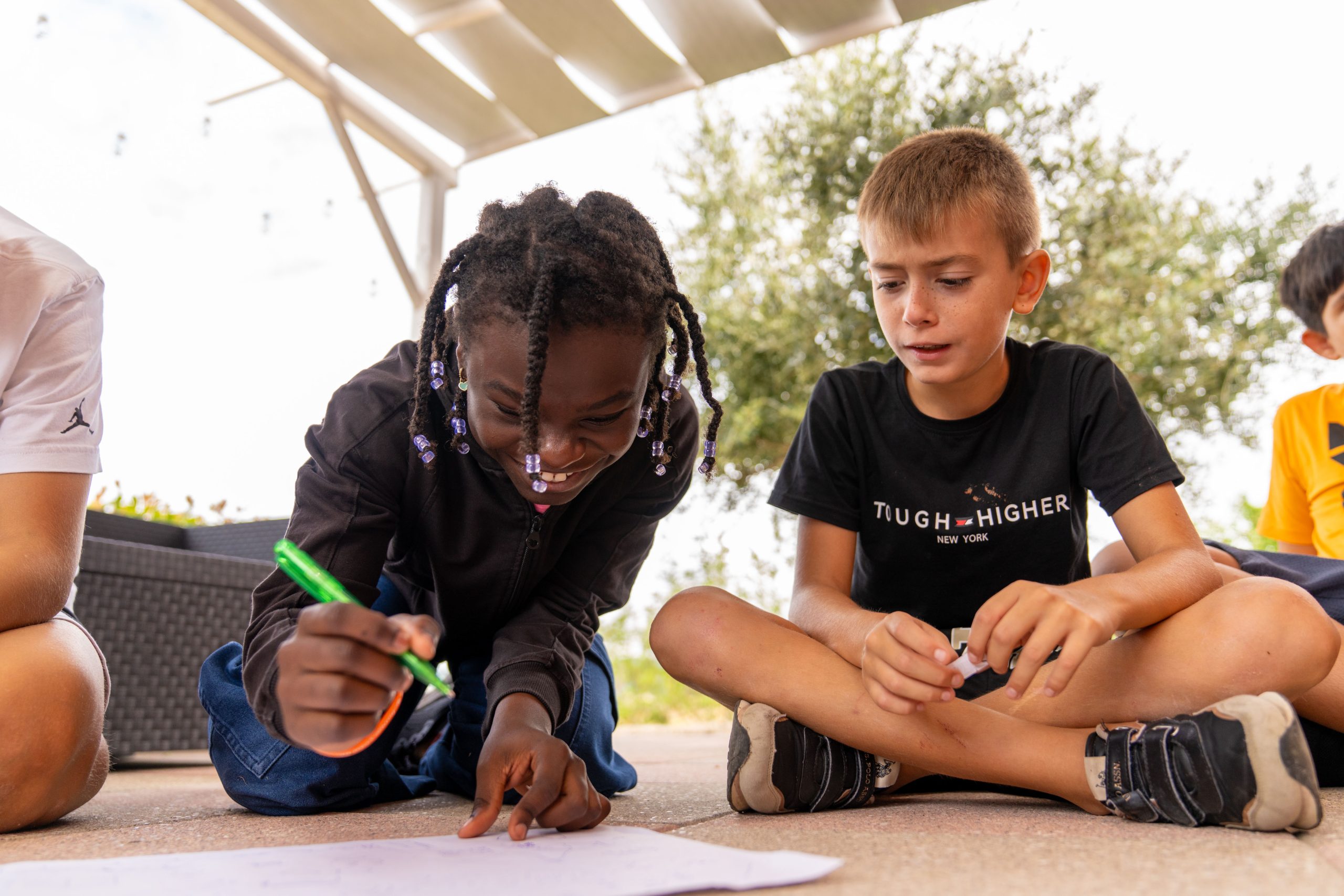
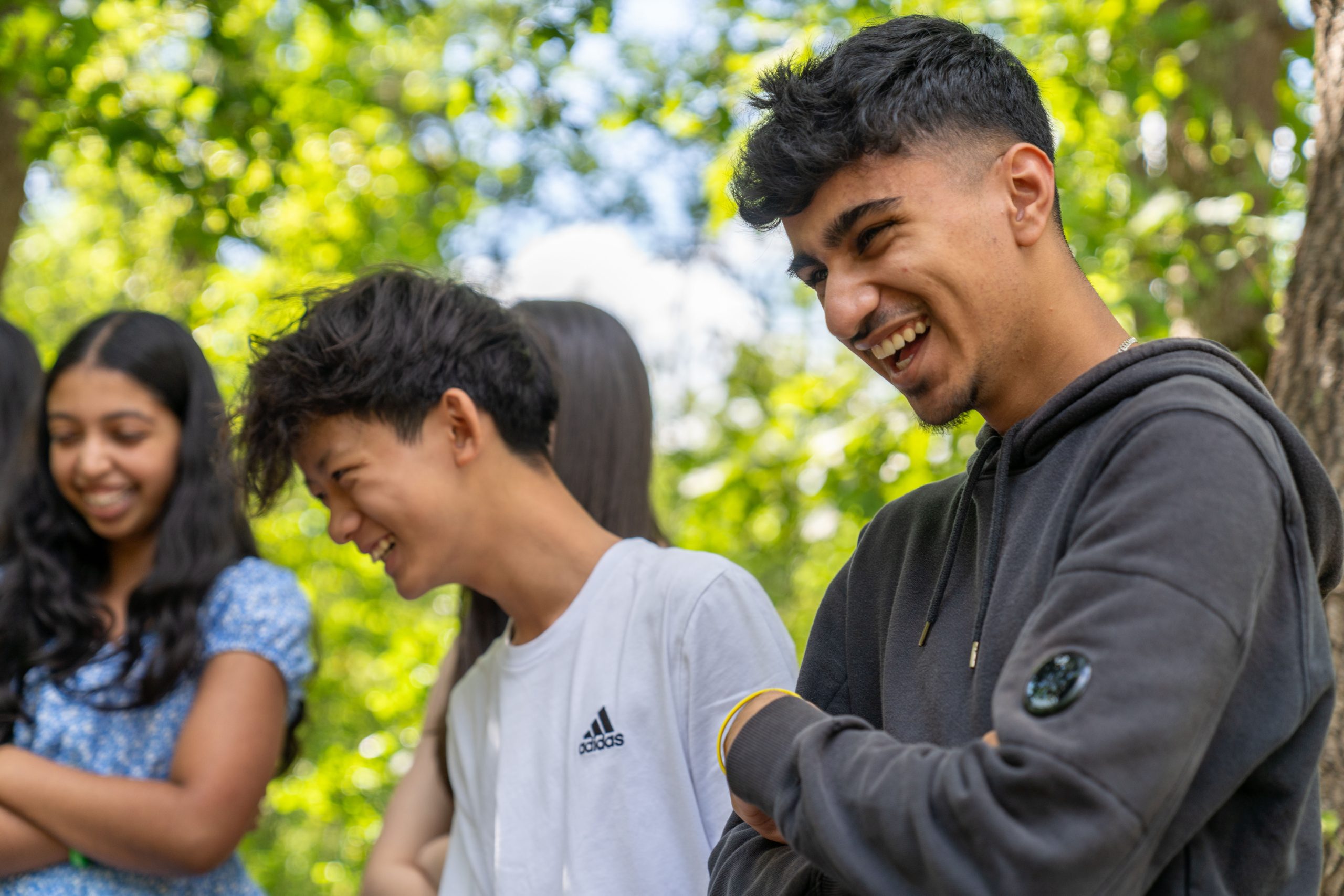
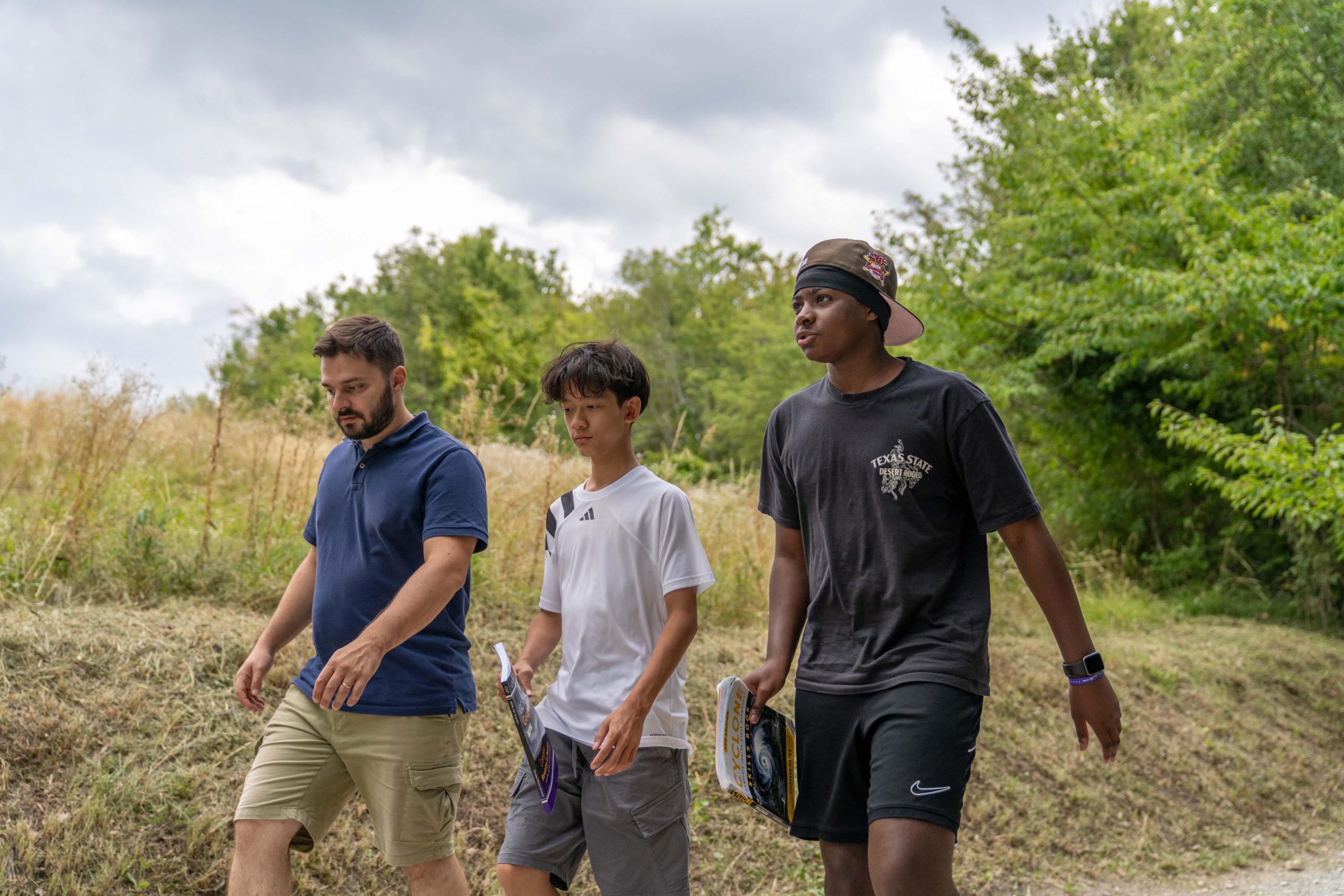
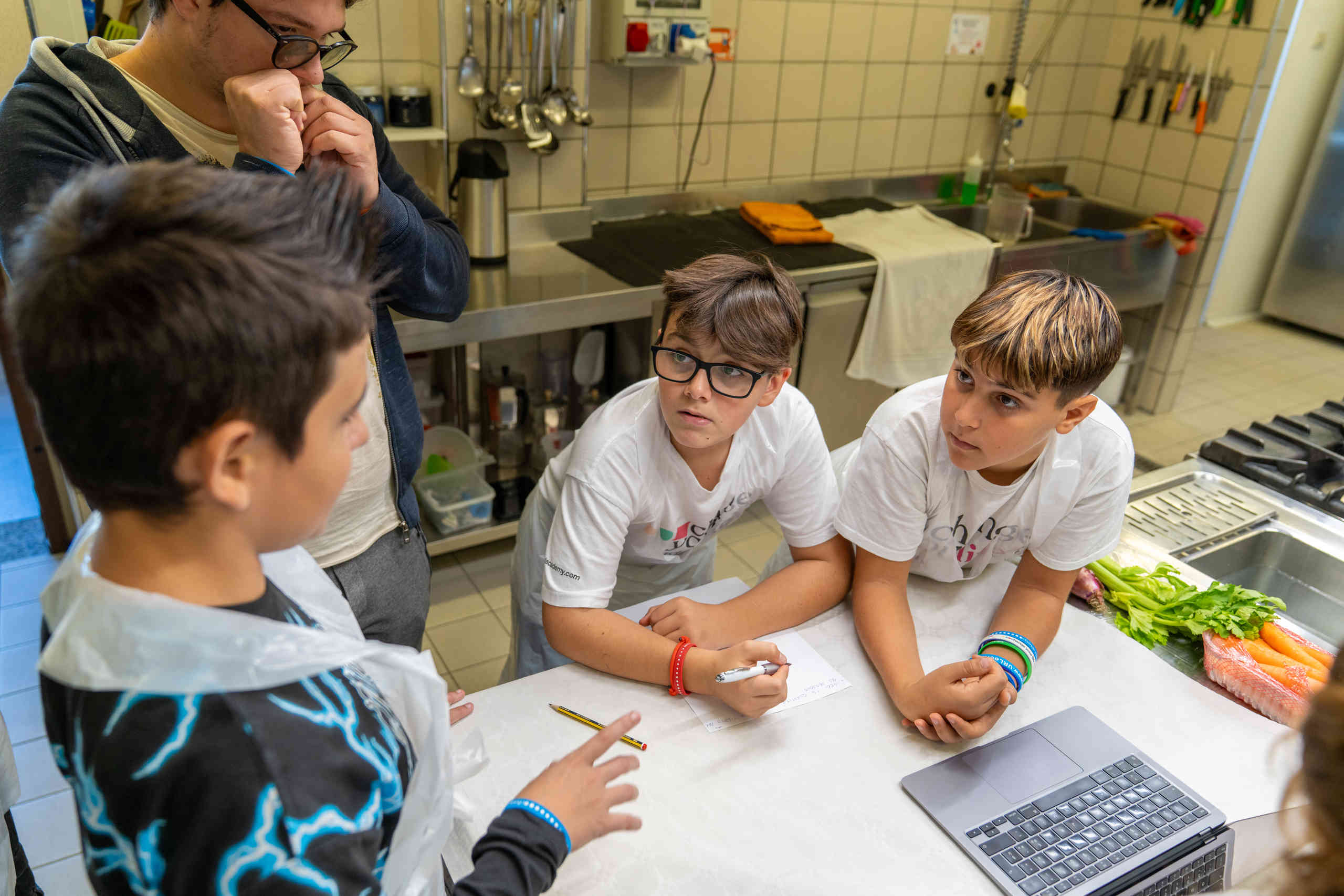
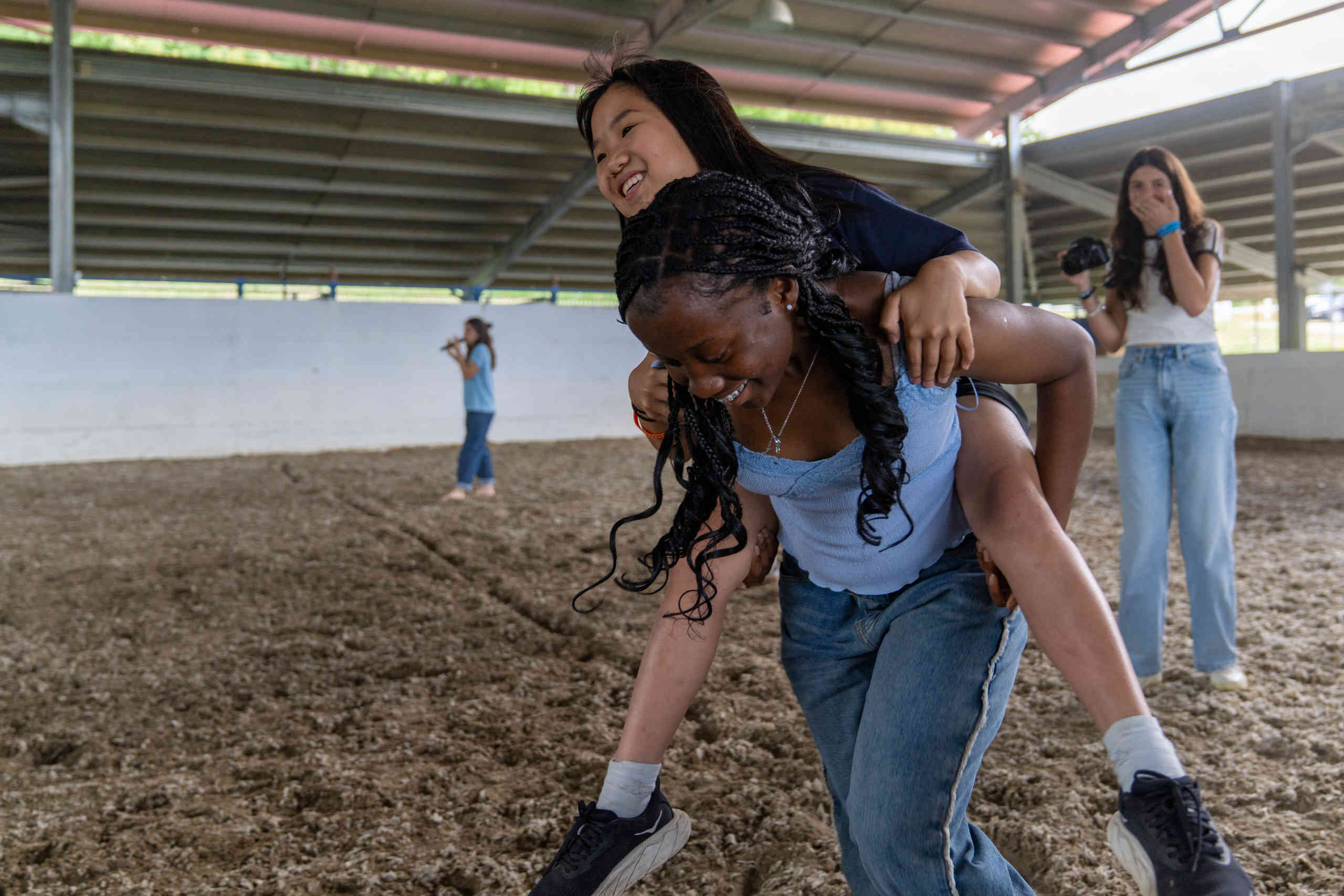
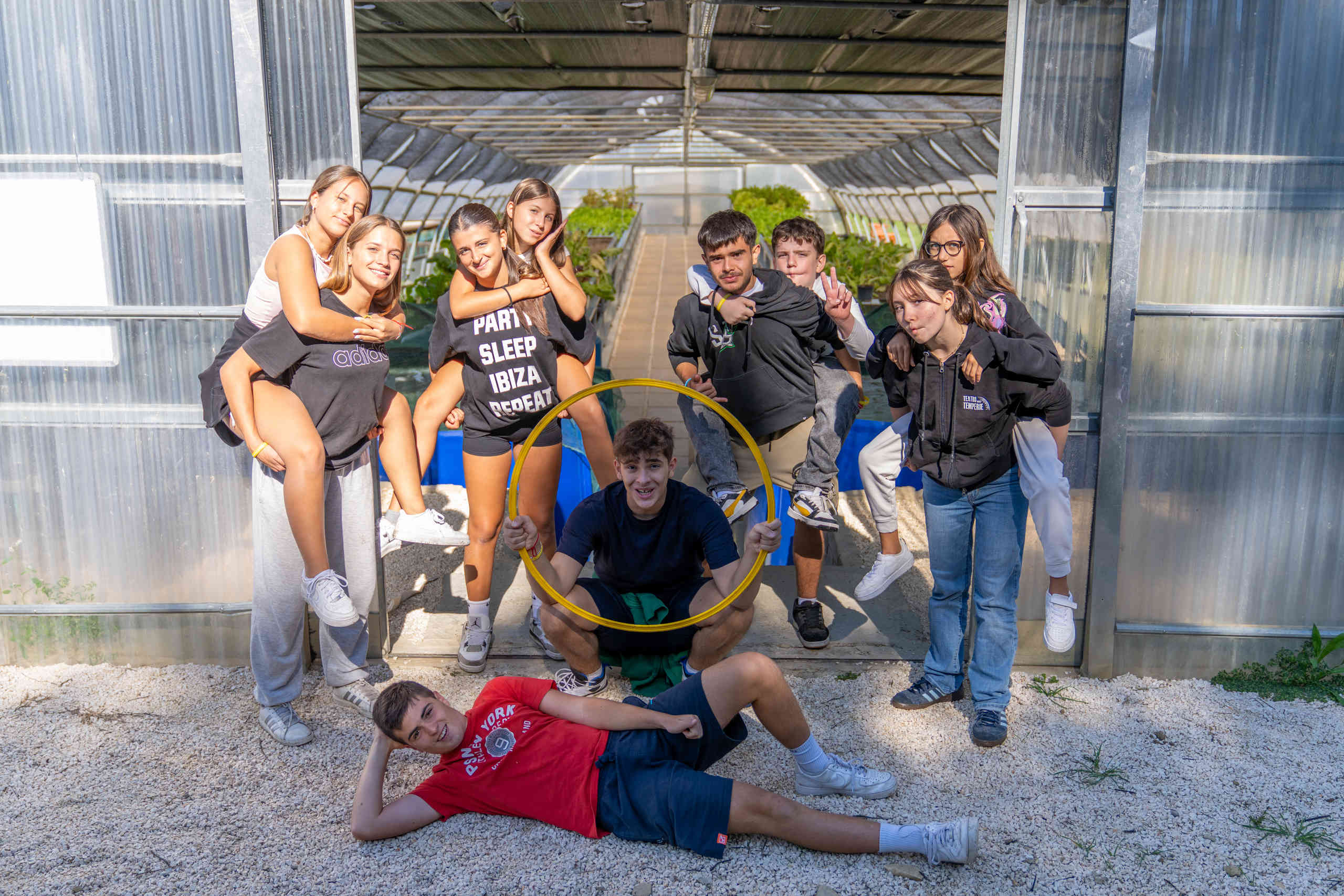
A typical afternoon — Cascina Fico, students working in teams between study sessions.
The actual weekly schedule.
Click any activity to see what it involves — including the meals, served three times a day with food that is 100% Italian and largely self-produced on site. The grid shows Wednesday by default — the first day with the full daily routine in place.
03 · The activities
The activities, one by one.
Each activity below appears multiple times across the week. Here it’s described once.
Three-Dimensional Reading
Three sessions a day, two to three hours each
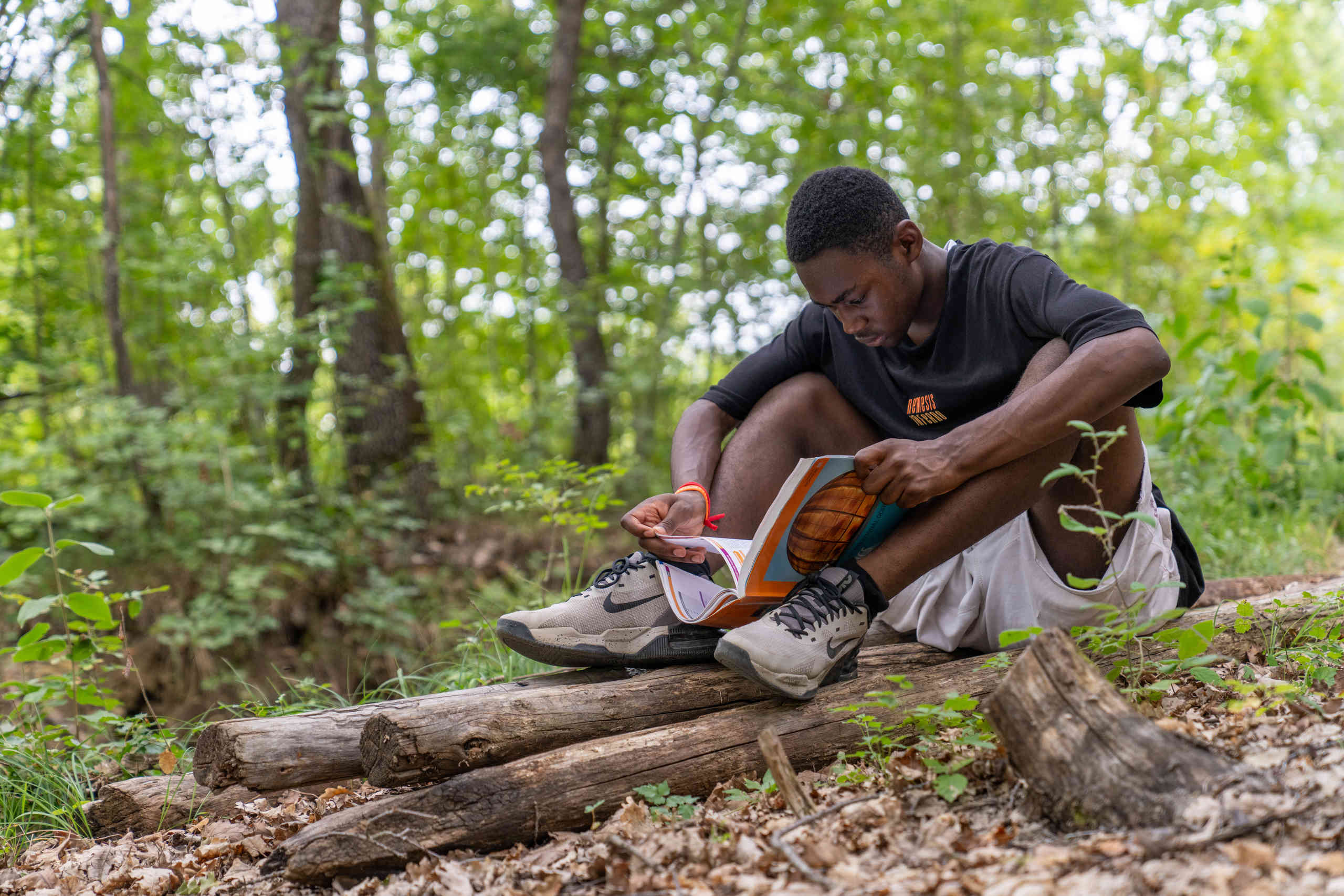
Three-Dimensional Reading is the study method at the heart of the week. It is not speed reading. Students work with their own school textbooks. They learn how to slow down, notice when attention drops, identify what they have understood, and return to a text without panic. Speed may improve, but the aim is better attention, comprehension and confidence.
CYL calls this method Three-Dimensional Reading because it works with three things at once: comprehension, attention, and the body’s role in concentration. Most study methods only work on the first.
The first dimension is the slow, analytical reading almost everyone has been trained to do at school — reading a sentence, parsing it, building meaning logically, one step at a time. It works, but it is slow, and it tires. The second is faster: students learn to take in the structure of a passage almost at a glance, then come back to the analytical reading with a sense of where they are going. The two work together, not against each other.
The third dimension is the body. Posture, breathing and the state of the nervous system all affect how well a student can pay attention and how long they can keep working before fatigue takes over. This is why every morning at Kindle begins with Qi Gong and meditation: not as well-being extras, but as part of the method itself. A calm, alert nervous system is what makes the rest possible.
What this approach changes is not the speed at which a student reads, but the depth at which they take a text in. By the third day, students are reading their own school textbooks with a quality of attention that a normal study evening rarely produces, and finding that what stays with them is more than what they used to write down in notes.
Students bring a school textbook of their own and use it through the week, so by Sunday they have a method they have already tested on something that matters to them. The method has been taught to over 9,700 students across six European countries since 2016.
After the programme, every student keeps access to the CYL app for daily practice. Students can also request follow-up one-to-one sessions with a CYL instructor by Google Meet, by arrangement — to consolidate the method, to prepare for an exam, or to apply it to a new subject.
Qi Gong
Twenty minutes, every morning before breakfast
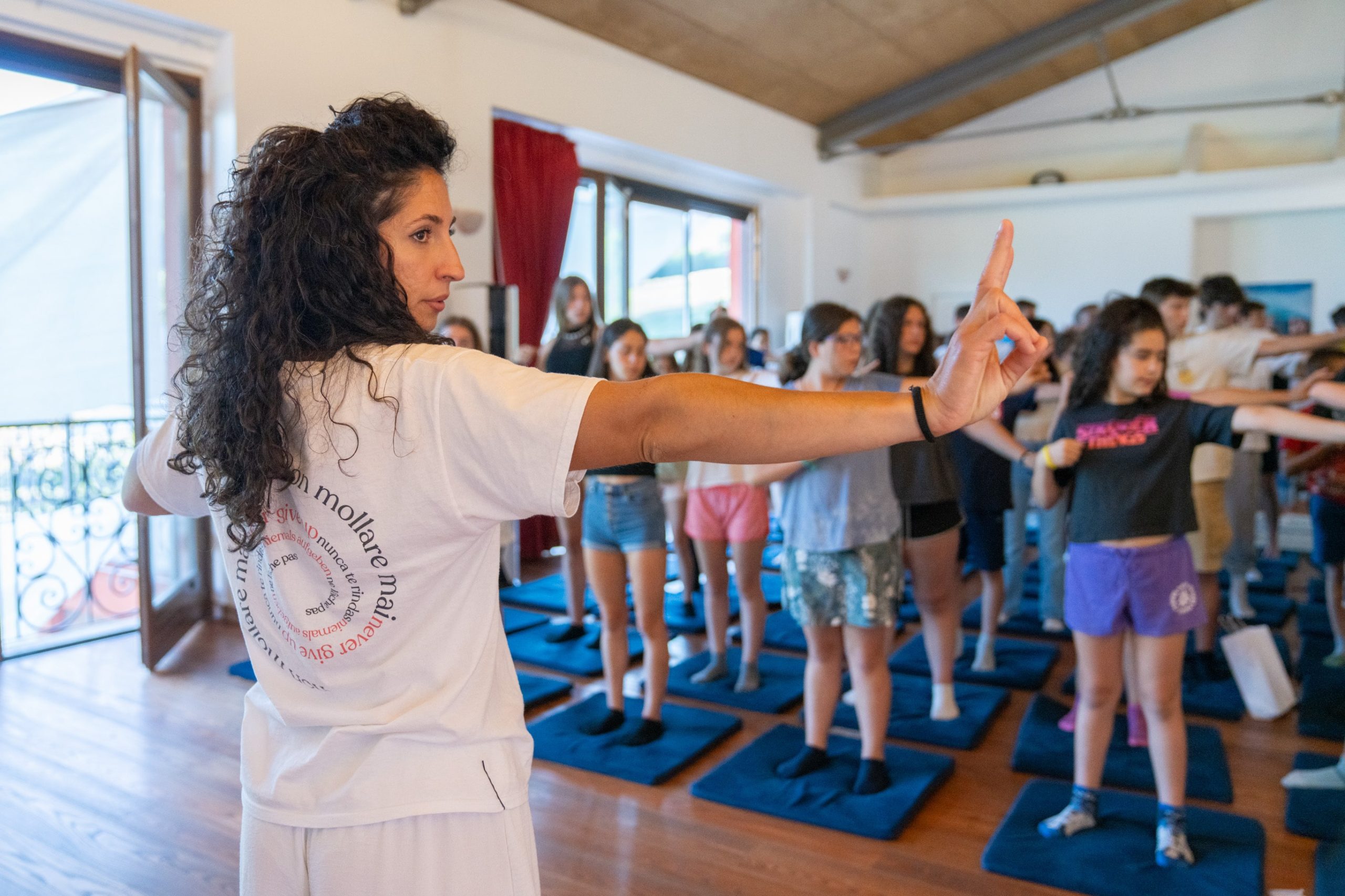
Qi Gong is a practice of slow, deliberate movement that strengthens the breath, and through the breath, the capacity to concentrate. It is taught here as a secular attention practice — not a religious or spiritual exercise. Simple sequences students can keep doing at home, on a bedroom floor, before a school day. By Friday most students follow along without watching the instructor.
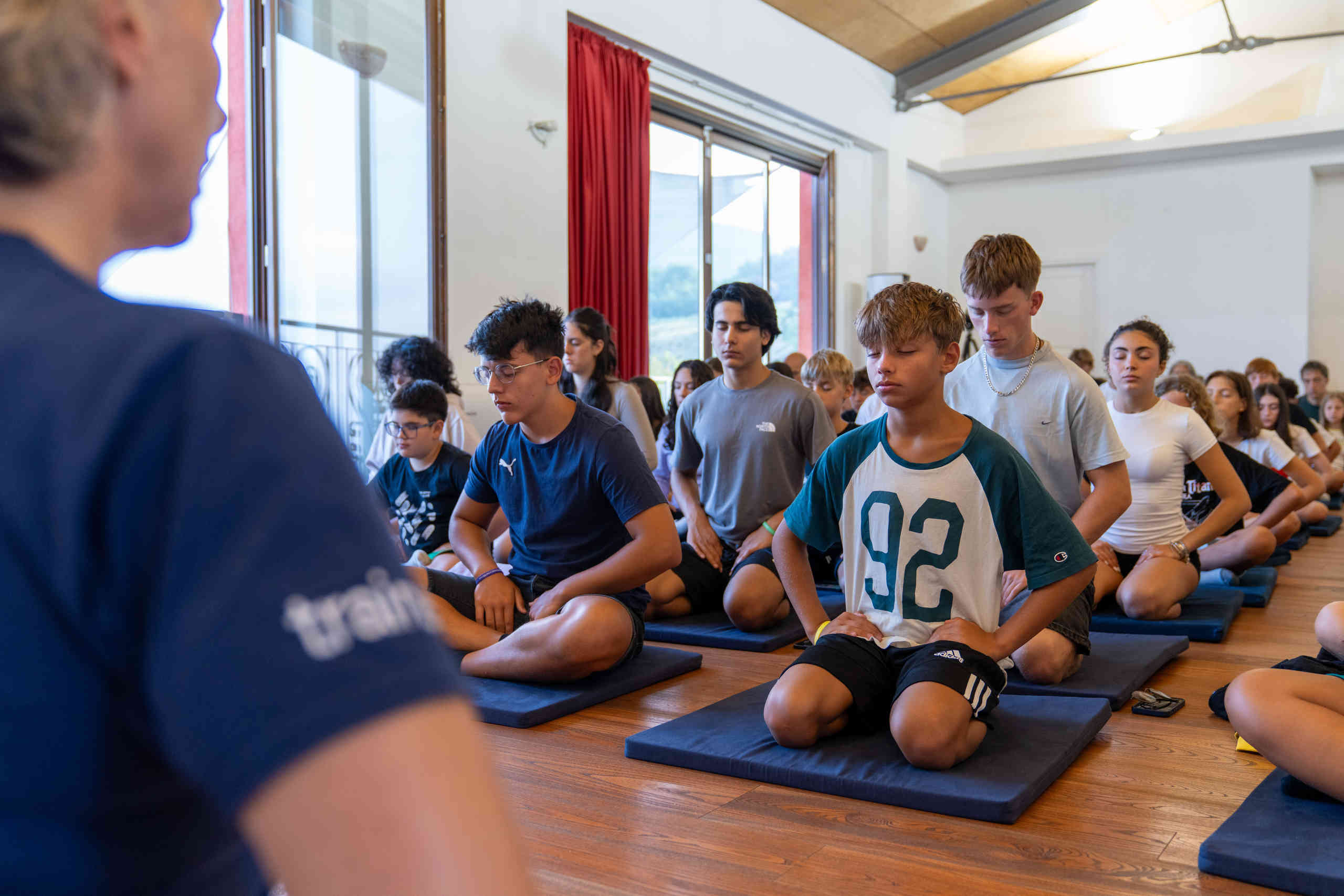
Presence Meditation
Twenty minutes, every morning after Qi Gong
Presence Meditation is a simple practice with no mysticism around it: students sit, attend to what’s happening, and learn to stop fighting their own thoughts. It is taught here as a secular attention practice — not a religious or therapeutic exercise. The aim is straightforward: building attention and self-regulation, and staying with a task even when it stops being interesting. Students keep access to a dedicated CYL meditation app after the programme to keep practising.
Daily theme workshops
Thursday, Friday, Saturday morning
Each of the last three days has a theme. Thursday: The Freedom to Be Yourself — a guided workshop on what it means to choose rather than perform, at school, at home, with friends. Friday: Balance, Harmony and Beauty — an aesthetic anchor for the week, on why care about how you do things, not just what you do. Saturday: Unity — the theme of the closing day, played out through team games rather than a workshop in the conventional sense.
These are conversations and exercises, not lectures. They happen because at this age the questions raised — choice, attention, belonging — are already alive, whether anyone names them or not.
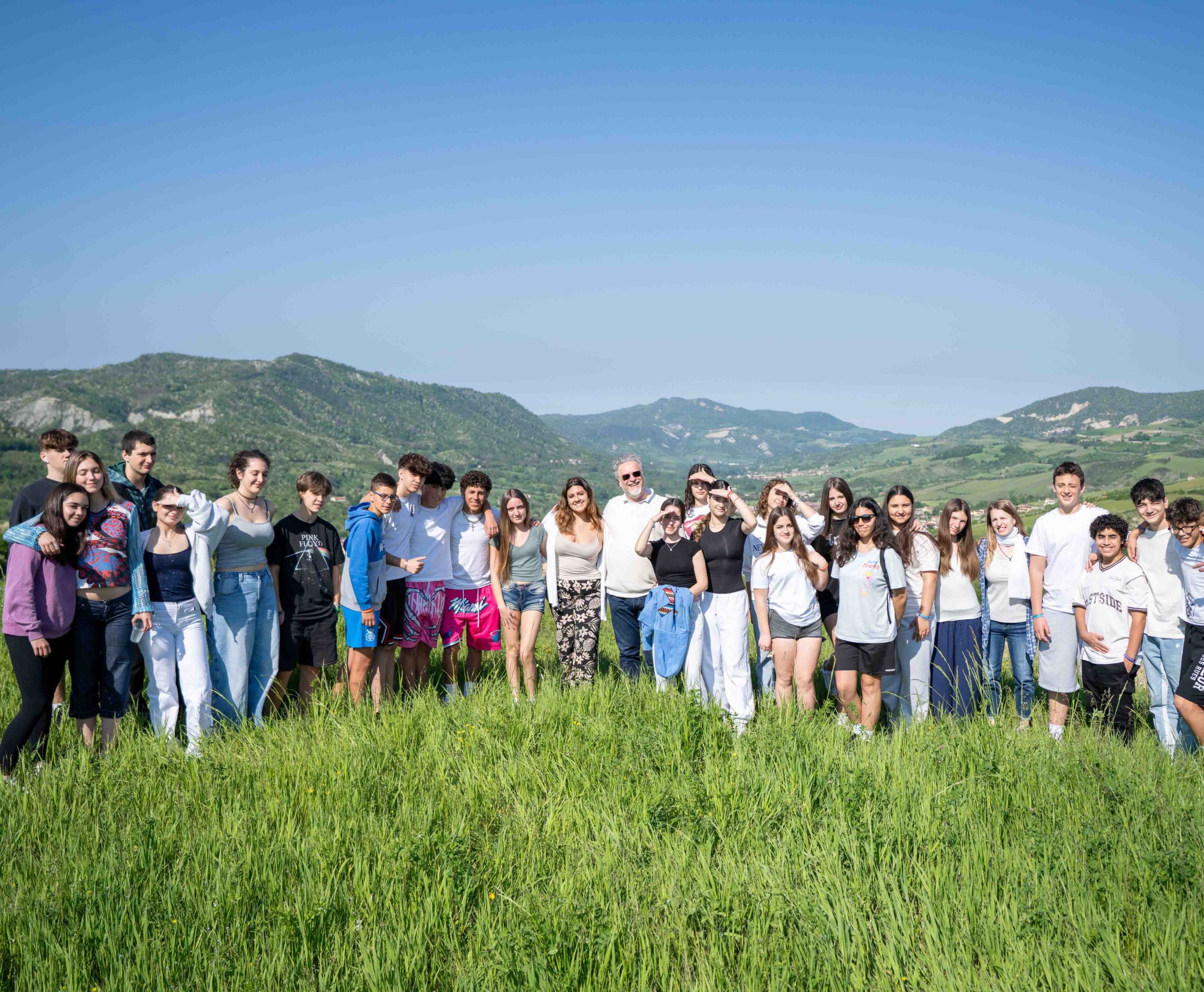
Walks in the grounds
Wednesday afternoon, with shorter walks across the week
The CYL house sits on land that opens onto woods and views over the Oltrepò Pavese valley below. The Wednesday afternoon walk runs through the property and the surrounding woodland — long enough to count as a proper walk, short enough to be manageable for an eleven-year-old. The views over the valley are part of the experience: nothing performative, nothing on the schedule beyond the walk itself.
It’s also the time most students start to talk to each other outside the study setting. By the end of the walk, the dynamics of the group have usually shifted.
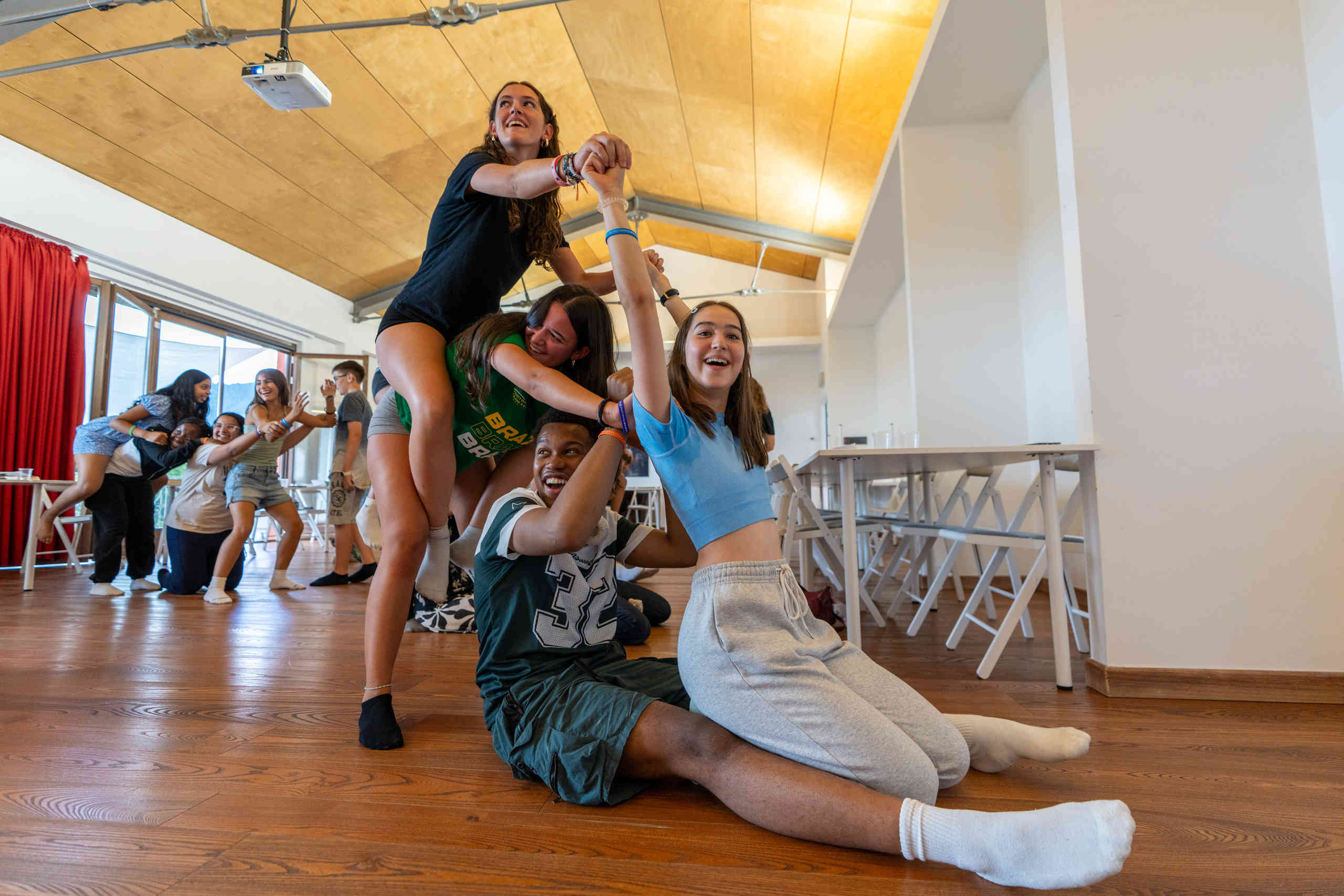
The team and team games
From Tuesday afternoon onwards
On Tuesday students split into teams. There’s a substantial prize for the winning team, and that’s a reasonable thing to start with: it gives the week a goal that’s easy to want. By Friday or Saturday, what holds the teams together is something else — friendships across ages, across genders, across nationalities, of the kind that don’t usually form in the school year. The prize is still there. It just isn’t the point anymore.
The Saturday morning Team Games are the social peak of the week. Three hours of structured play that depend entirely on cooperation. It’s the morning most students remember most a year later.
Special evening activity — Thursday.
Thursday evening — closes the day on Freedom
A reflective evening that closes the day on the theme of Freedom and opens the deeper question that runs through Kindle from here to Sunday: what choices about your future are you actually making, and which ones are being made for you. The aim is to give students something to sit with, talk about, and carry forward — no homework attached. We keep the specifics under wraps so it lands fresh when students arrive.
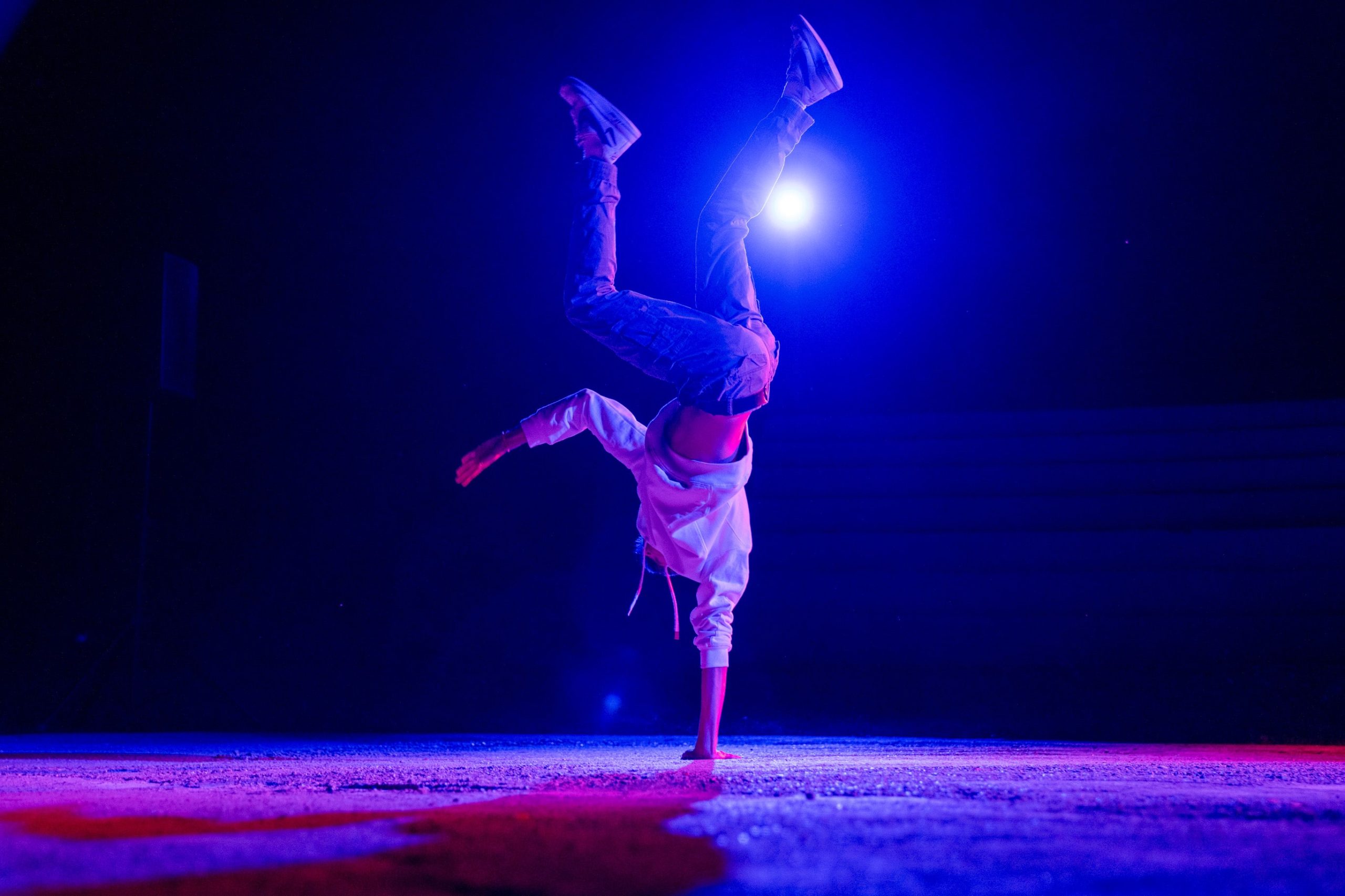
Special evening activity — Friday.
Friday evening — one of the most important nights of the week
Friday evening is where the principle of non-judgement, which runs through every other part of the programme, becomes a live experience. Students are invited to take part in whatever way suits them. There is no panel, no scoring, and no expectation about how anyone has to take part.
What happens almost every Friday is the same. A student who hasn’t said much all week opens up. A student who said no chance on Wednesday surprises themselves on Friday. A student who has been quiet all week walks out at the end looking a little different. The point of the night isn’t the activity itself — it’s the room.
It’s a night a lot of parents notice afterwards. Not because of what their child did, but because of how they came home. We keep the specifics under wraps so it lands fresh when students arrive.
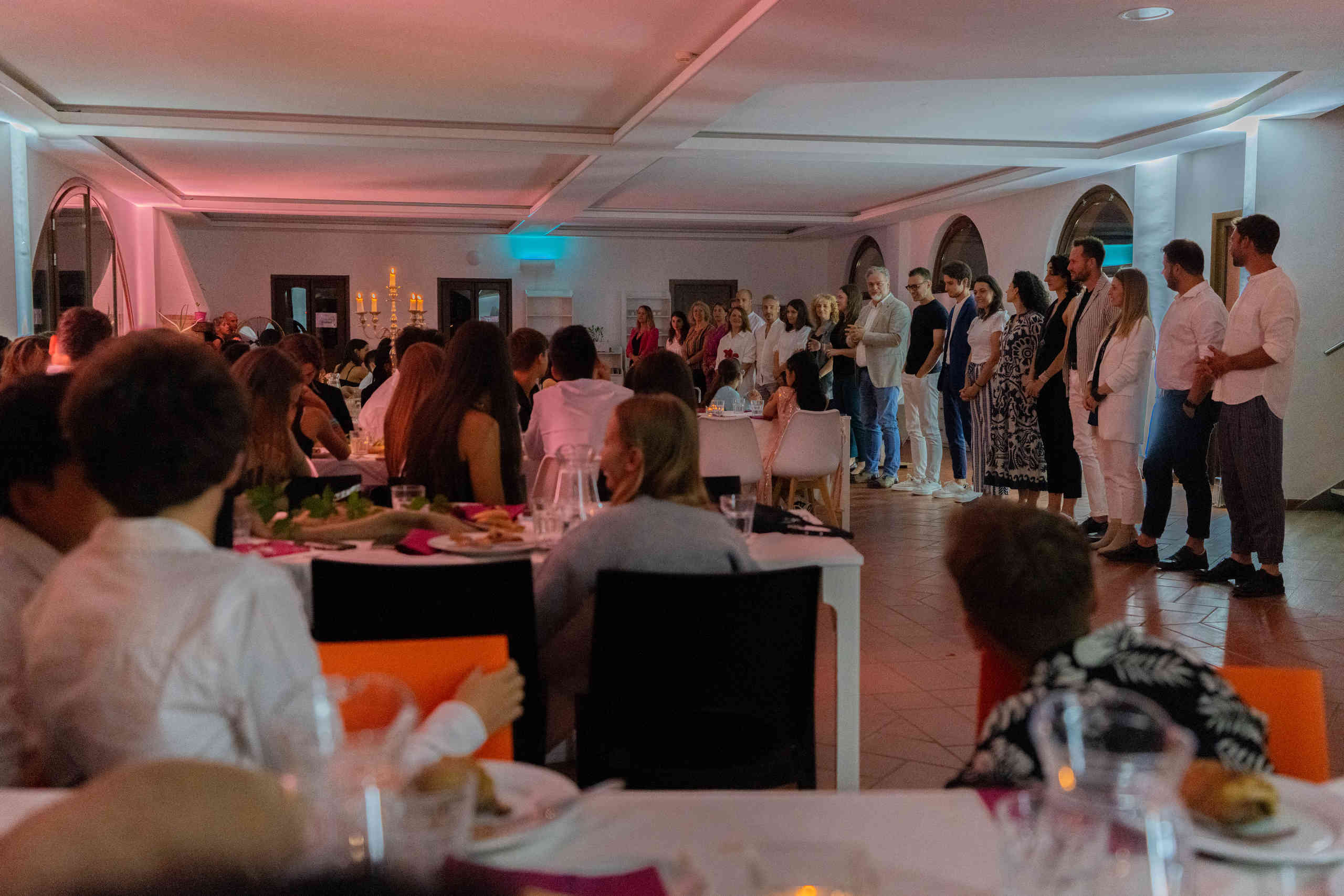
Gala dinner
Saturday night
Students usually dress up a little, using whatever they have brought with them — nothing special needs to be bought for the night. Tables are set properly. There are speeches, music, dancing. A real celebration of the week.
It’s also a moment with a quiet undertone. The week is almost over, and what comes next is not the staff’s job to deliver — it’s the students’. The Gala is where most students make the inward choice to take what they’ve learned home, and to actually use it: to keep reading the way they’ve learned to read, to keep meditating, to keep showing up for the things that matter. By the end of the night some have already said it out loud. The rest of them say it on Sunday morning.
Closing Ceremony
Sunday morning, before the bus to the airport
The Closing Ceremony is one of the most memorable moments of the week, and the staff don’t try to soften it. By Sunday morning everything has been done. The whole group gathers one last time, and the four principles that quietly shaped the week are named together — respect for the environment, respect for people, non-judgement, and the fourth, the one carried home: never give up.
Then there are awards for the teams, words from each student, photographs. And then the music starts, and the goodbyes begin — dancing, tears, the kind of friendships that become real exactly when you have to leave them. Most parents say their child talked about that morning for weeks afterwards.
04 · How the week settles in
How the week, settles in.
The first two days are mostly about arriving. Students get to the house, meet the staff, and begin learning the method. Some join in quickly. Others stay quieter at first, watching the group and testing whether the place feels right. Both are common.
Most parents who message in the first 48 hours hear from a child who isn’t sure. By Wednesday morning that almost always changes…
Thursday, Friday and Saturday each have a daily theme. The final evening is the gala dinner. Sunday is the closing ceremony, when students say goodbye to the group and the place.
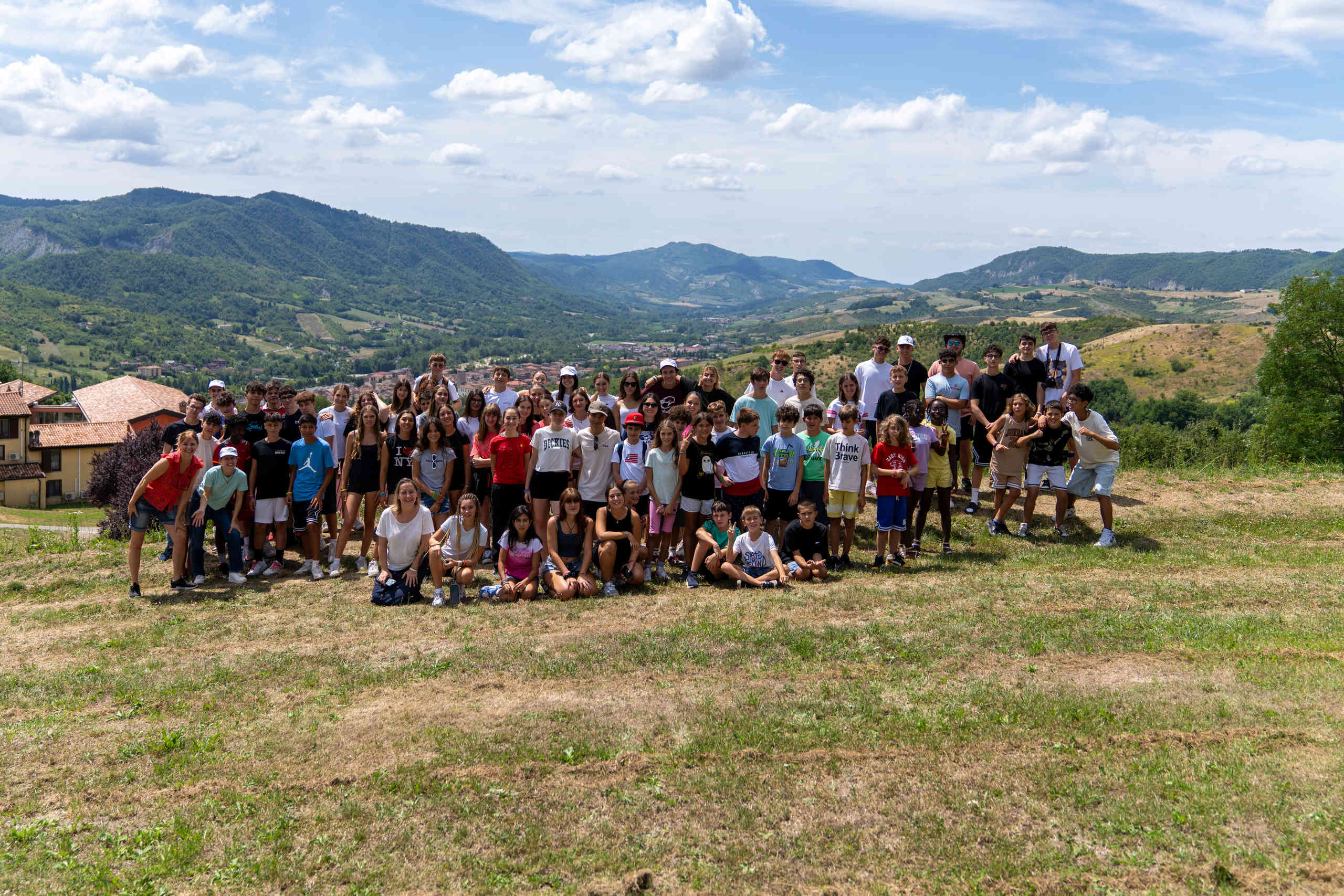
The pattern is consistent across hundreds of students: a slow first two days, a sharp shift on the third, and a strong reluctance to leave on the seventh. Many students who arrived unsure are asking by Sunday whether they can come back the following year. Some return years later as adult staff, after going through a full vetting process, to help teach what they were once taught.
05 · What's included
What's included, in the fee.
Everything the student needs for the programme itself is part of the price. The “Not included” list below covers the small personal things that sit outside that.
01
Travel
Return flight London → Milan, with checked baggage of 20–23 kg. CYL Italian staff meet students at the London airport on Monday morning, fly with them, and travel back with them on Sunday evening. Bus transfers between Milan airport and Varzi are included on both ends.
02
Accommodation & meals
Six nights at the residential house in Varzi. All meals, every day, prepared on site — three full meals a day plus an afternoon break. Special dietary requirements can be accommodated — they are agreed in advance with the kitchen team during the booking process so that everything can be planned properly.
03
The programme itself
The full seven-day programme, including all study sessions, workshops, evening events and the Saturday excursion. Students bring a textbook from school of their own to apply the method to during the week — most do, and by Sunday they have a method they’ve already tested on something that matters to them.
04
After the programme
Continued access to the CYL app for daily practice of the method, and to the dedicated meditation app. A consolidation period in the four weeks after the programme, with thirty minutes a day of guided practice. Students can also request follow-up one-to-one sessions with a CYL instructor by Google Meet, by arrangement — to consolidate the method, to prepare for an exam, or to apply the method to a new subject.
Not included
- Pocket money for personal purchases during travel — the airport, snacks on the way, the occasional small thing during the week.
- Personal medication, if required, supplied by parents and declared in writing in advance. Storage and supervision of the process can be agreed during the booking.
- Phone roaming, if you'd rather your child had mobile data outside the house Wi-Fi. The house has full Wi-Fi and most students simply use it all week.
06 · Day-to-day care
Day-to-day care, the practical things first.
The programme is run by The Bridge TTMT SA, a Swiss-registered company based in Poschiavo, Switzerland, together with Associazione Sacrofuoco, the Italian association based at Cascina Fico in Varzi.
Sacrofuoco is responsible for the educational design and daily running of the week. Since 2016, the programme has worked with more than 9,700 students across six European countries.
The practical details we get asked about.
Students keep their phones.
They can call home in their free time, every day, and most do. Phones are set aside during the study sessions and the meditation, but they’re not confiscated.
“My daughter was nervous about coming. From the second day onwards she barely used her phone — by choice. She started reading books on her own initiative for the first time.”
— Diana Li, parent
A WhatsApp group for parents runs every day.
A WhatsApp group runs during the week. Each evening, parents receive a short video summary, so they can see what happened that day.
“The communication before, during and after the programme was excellent. We knew where our daughter was and what she was doing every day, without having to ask.”
— Raluca Paraian, parent
Staff travel with the students.
Italian CYL staff accompany students from the meeting point at the London airport to Varzi, and back again on Sunday. This includes the flight, the transfer, the week at Cascina Fico, the return flight, and the handover to parents. Students do not travel alone.
“My daughter had had a hard time at school and didn’t want to go. The atmosphere there was respectful, safe, and the adults wanted the best for her. She came back and asked, on a loop, when she could go again.”
— R Sam, parent
07 · Next steps
Next steps, in your own time.
Practical
The three summer 2026 editions, what the price covers, payment terms.
Direct
WhatsApp is the fastest way to ask a specific question — about your child, about a date, about anything that doesn’t have a clean answer on a website. Messages typically reach Diana, who handles UK parent enquiries; safeguarding questions are routed to the Designated Safeguarding Lead.
From parents
The reviews are public and unedited. They’re the most honest place to look before deciding.